
Why Sales Selection Matters More Than Most Life Insurance Leaders Realize


Most Life Insurance sales leaders agree on one thing: coaching and training are critical to performance. But far fewer stop to ask a more fundamental question.
What if the real performance gap is created before a rep is ever selected?
This question came into sharp focus during a recent benchmark study conducted for a life insurance organization that was recruiting advisors at scale.
Creating the Benchmark
The organization partnered with us to build a sales hiring benchmark using the POP assessment.
The POP is a psychometric assessment designed to evaluate sales potential, not experience or product knowledge. It looks at underlying drivers that influence success in a sales role, such as competitiveness, urgency, independence, comfort with rejection, and overall sales potential.
To make the results practical for leaders, candidates are grouped using a simple traffic light framework:
Green: Strong sales potential and a high likelihood of success in the role
Yellow: Average to below average sales potential
Red: Poor fit for the demands of the sales role
This framework allows leaders to quickly understand risk before making a hiring decision.
Connecting the Benchmark to Real Performance

To validate the benchmark, the organization analyzed actual production data and compared average annual premium production across each POP category.
The results were clear.
Green light advisors consistently outperformed their peers.
Green candidates
146 advisors
Average annual premiums: $32,751
Yellow candidates
43 advisors
Average annual premiums: $22,387
Red candidates
30 advisors
Average annual premiums: $23,325
What matters here is not the exact dollar amount. It is the pattern.
Advisors with stronger underlying sales potential produced meaningfully more business, on average, than those with average or poor sales potential.
Translating the Data Into Business Impact
Once the performance gap was visible, leadership asked a practical question.
What would have happened if we had only hired green light candidates?
Specifically, what if the organization had replaced the 73 yellow and red hires with green light advisors?
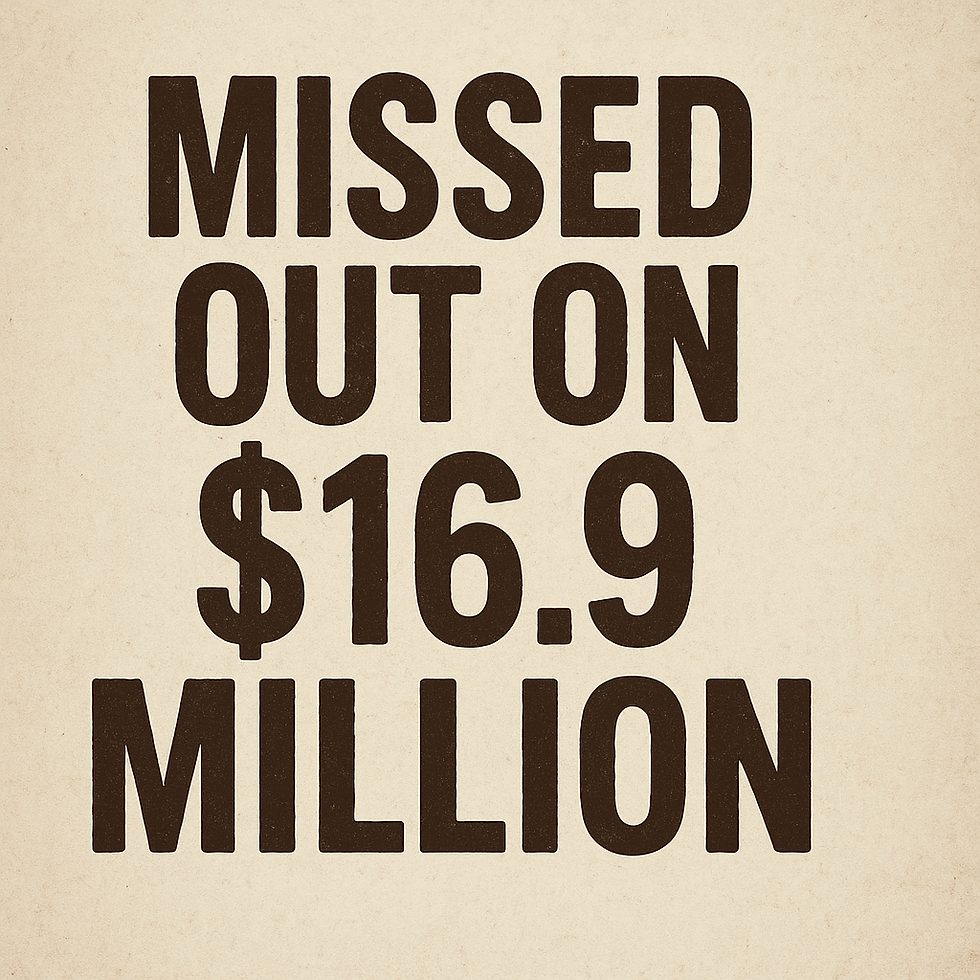
Using the actual production averages, the model showed that those same 73 roles would have generated approximately $728,000 in additional annual premiums.
That represents roughly a 44 percent increase in productivity from the same number of advisors that were contracted.
Another way to look at it, and the way sales leaders found most useful, was this:
Each non green hire cost the organization roughly $10,000 per rep, per year in lost premium opportunity.
This was not a one time miss. It was a recurring gap created by the original hiring decision.
What Sales Leaders Took Away
This analysis did not suggest that coaching or training were unimportant.
It showed something more subtle.
Selection determines how much upside coaching can unlock.
When reps have strong underlying sales potential, coaching accelerates results. When that foundation is missing, even great coaching struggles to close the gap.
For this organization, the benchmark reframed how leaders thought about hiring risk.
Hiring outside green did not mean a rep would fail. But it did mean leadership was starting with a lower ceiling and a measurable productivity cost.
The Bigger Lesson
In high volume sales environments, small differences in selection compound quickly.
A ten thousand dollar annual gap per rep becomes hundreds of thousands of dollars when multiplied across a team.
This case reinforced a simple but powerful truth for sales leaders.
You cannot coach your way out of a selection problem at scale.
The fastest path to higher production is not more pressure, more activity, or more training. It is better selection at the front end.
And when selection is guided by a validated benchmark, the results speak for themselves.


Comments